AI Adoption & Transition
Your AI strategy is already being written. Just not by you.
78% of employees are using AI tools you haven’t approved. Customers expect it. Competitors have deployed it. You can let that shape your strategy — or you can get ahead of it.
Complimentary 30-minute strategy session
The Opportunity
$3.70
McKinsey, 2025
Returned for every $1 invested — early AI movers
1.5×
BCG, 2025
Higher revenue growth for AI leaders vs. laggards
$10.30
McKinsey, 2025
Per $1 for top AI performers — nearly 3× the average
75%
Microsoft, 2024
Of knowledge workers already using AI at work
The Pressure
78%
Microsoft, 2024
Bring their own AI tools — with or without permission
80%
Gartner, 2024
Of AI projects fail — twice the rate of non-AI projects
34.8%
Cyberhaven, 2024
Of data entered into AI tools is sensitive or regulated
42%
KPMG, 2025
Of companies abandoned AI initiatives — up from 17%
Where AI Works
The parts that actually work — and the ROI to prove it
AI isn’t hype in every context. In specific, well-defined tasks, it genuinely reduces workload, speeds decisions, and generates real returns. The organisations getting results aren’t doing “AI” — they’re solving specific problems with the right tools.
The difference between the companies seeing $10 return on every dollar and those abandoning their projects isn’t budget or enthusiasm. It’s specificity. They started narrow, proved it worked, then expanded.
That’s the whole approach. It sounds obvious. Almost no one does it.
Document Processing & Analysis
Contracts, reports, compliance documents, internal knowledge — AI reads and extracts faster than any team. Measurable time savings from day one.
5–10× faster document reviewCustomer Interaction at Scale
First-touch queries, FAQs, routing complex cases to the right person. Frees your team for work that actually needs human judgment.
40–60% of tier-1 queries handledData Synthesis & Reporting
Pulling patterns from large datasets, generating executive summaries, flagging anomalies. What took analysts hours now takes minutes.
Reported 40% time reduction (McKinsey)Internal Knowledge & Onboarding
Your institutional knowledge, policies, and processes — made searchable and accessible. New staff get answers in seconds, not weeks.
Onboarding time reduction of 30–50%The Pressure
The decision isn't if you adopt AI. It's whether you lead that process or react to it.
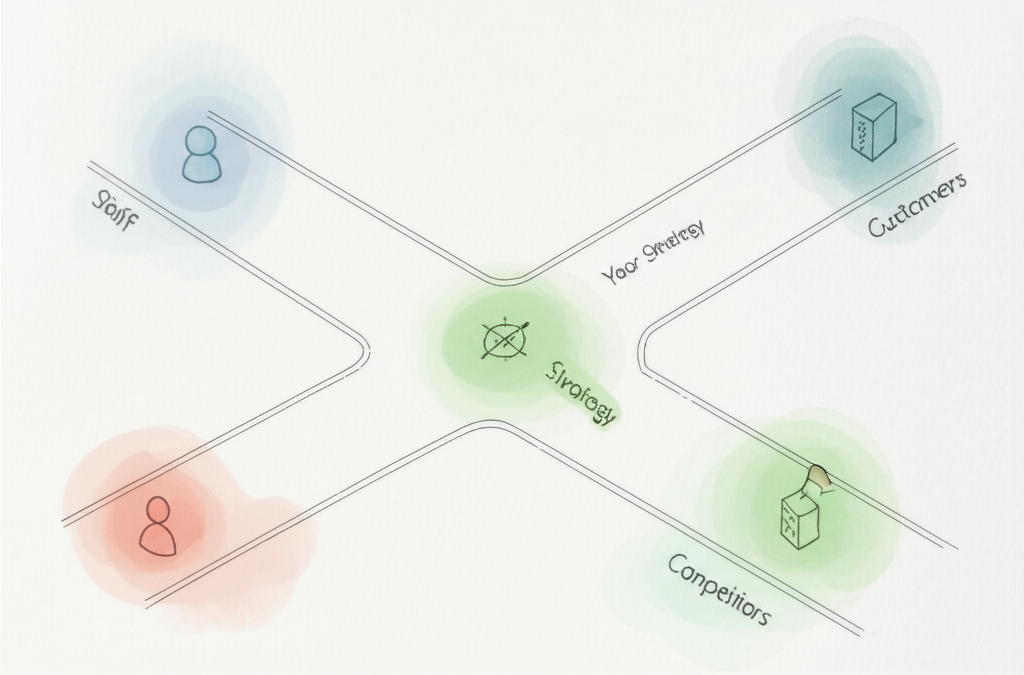
Three forces are already shaping your AI strategy. Your own staff. Your customers. Your competitors. The question is whether your leadership is the fourth.
Someone is deciding how AI enters your organisation. Is it you — or is it happening around you?
Staff are using personal AI accounts on company projects. Customers arrive with AI-assisted expectations about speed and personalisation. Competitors are quietly restructuring with AI-augmented teams. Your AI strategy exists whether you’ve written it or not.
Your Staff
7 in 10 employees use AI tools without telling management. They’re solving real problems — just without oversight, consistency, or data controls.
Your Customers
Customers using AI tools now arrive faster, better informed, and with expectations shaped by the best experiences — not your industry average.
Your Competitors
While 80% of AI projects fail, the 20% that succeed compound. Early movers with the right strategy are building structural advantages today.
The Human Side
Your staff aren't resisting change. They're protecting something real.
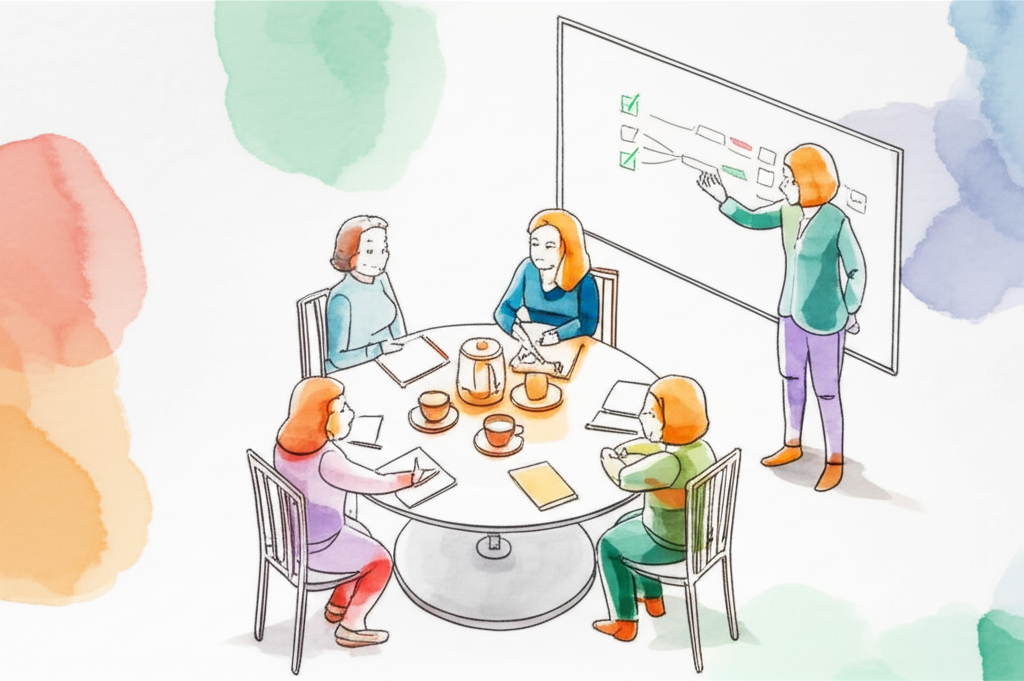
The most common reason AI adoption stalls isn’t technology. It’s the people who are expected to use it. Not because they’re wrong — because they haven’t been brought into the thinking.
Fear of replacement is the obvious one. But the more practical concerns are subtler: Will AI make my expertise irrelevant? Will mistakes be blamed on me? Will I be expected to work faster without more support? These aren’t irrational. They’re fair questions that most AI rollouts don’t answer.
The organisations that see genuine adoption treat this as a change management problem — not a training problem. The technology is usually the easy part.
“Will this replace my job?”
The #1 unspoken concern. Staff who feel threatened disengage or quietly resist. Organisations that are direct about the intention — augmentation, not replacement — see far higher adoption rates.
“I’m being asked to check AI’s work, not do my work.”
When AI outputs are low quality or require significant review, staff bear the accountability without the benefit. Bad AI rollouts create more work, not less.
“What happens to my data?”
Legitimate concern — especially in regulated industries. Staff who don’t trust the tools won’t use them. Data governance answers this directly.
“Management deployed something that doesn’t understand our work.”
Top-down AI mandates that weren’t designed with front-line input usually fail. The people closest to the problem need to be part of the solution.
The single most powerful lever? Visible leadership.
When senior leaders visibly use and support AI, the share of employees who feel positive about it rises from 15% to 55%. That’s not a technology problem. That’s a leadership signal problem. (BCG, 2025)
The Honest Part
Most AI projects fail. Here's why — and how to not be the statistic.
The hype says AI transforms everything. The data says 80% of projects fail. Both are true — depending entirely on how you approach it.
Of enterprise AI projects fail to deliver expected value — twice the failure rate of traditional IT projects
Of companies abandoned AI initiatives in 2025 — up from 17% the previous year
Of generative AI proof-of-concepts abandoned after discovery — never made it to production
Starting too broad
Deploying “AI across the organisation” without defined use cases creates expensive uncertainty. Projects that start narrow and specific have 3× higher success rates.
Skipping the data foundation
AI is only as reliable as the data feeding it. Organisations with poor data hygiene get inconsistent outputs and lose trust in the system — often permanently.
Moving from PoC to production too fast
A demo that works with curated inputs often fails with real-world messy data. The gap between “impressive demo” and “reliable production system” costs organisations dearly.
Treating it as a technology deployment
The failure usually isn’t technical. It’s that the humans expected to use the system weren’t involved in designing it, don’t trust it, or weren’t trained to use it well.
Ignoring regulatory exposure
Data privacy, sector-specific compliance, and emerging AI regulation (EU AI Act, etc.) create real liability. Especially when sensitive data is already flowing through unsanctioned tools.
No feedback loop
AI systems degrade without monitoring. Outputs drift, edge cases accumulate, and hallucinations become embedded in workflows before anyone notices. You need an ongoing review process, not a one-time deployment.
How We Work
A structured transition — not a leap of faith
We start where AI is proven, build trust through small wins, and expand only when the foundation is solid. Every phase produces measurable output.
01
AssessUnderstand what's actually happening in your organisation
Before recommending anything, we map what AI is already in use (sanctioned and not), what the data landscape looks like, and where the real pressure points are for your staff. Most organisations discover their AI situation is more advanced — and more risky — than leadership realised.
Output: AI Landscape Report + Risk Register
02
IdentifyFind the high-probability wins — not the ambitious ones
We identify 3–5 specific use cases where AI has a strong track record in your sector, the data is available, and the success criteria are measurable. We explicitly reject use cases that look impressive but have poor historical success rates. This is where most consultancies oversell — we don’t.
Output: Prioritised Use Case Shortlist with ROI projections
03
PilotDeploy narrow, measure rigorously, prove the value
We build the smallest version that produces a real result — not a demo, a working system. Typically 6–12 weeks. Staff who will use it are involved from the start. We measure the same things before and after. If it doesn’t perform, we say so and move to the next candidate.
Output: Working system + before/after performance data
04
ChangeMake adoption stick — the part most projects skip
A working system that nobody trusts or uses is worthless. We run structured change management alongside the technical deployment: transparent communication about the purpose, training that’s actually useful, feedback loops so staff can flag what isn’t working, and governance that answers the data questions directly.
Output: Adoption programme + governance framework
05
ScaleExpand from a proven foundation — not a wishlist
Once a use case is performing and embedded, we extend it to adjacent areas or move to the next use case on the shortlist. Each phase uses the same methodology. The cumulative effect is an organisation that builds genuine AI capability — not a series of disconnected experiments.
Output: AI Capability Roadmap + ongoing performance review
Get Started
Start with a clear picture of where you actually stand
Before any recommendations, we spend 30 minutes understanding your current situation — what’s already in use, what the real pressure points are, and where AI is most likely to pay off in your specific context.
No commitment. No pitch deck.